- The 64
- Hexagram 56
56 旅 The Traveller
艮 Mountain below, 離 Fire above
Fire on the mountain, which passes and does not stay: the traveller, the stranger. The text says small things get through, and that for the traveller firmness is good.
Tap a line of the figure to see where it leads when it changes. Cast for a question of your own. New here? What the I Ching is, coming from tarot.
This site's reading
卦辭 小亨,旅貞吉: small success; for the traveller, firmness is good. Away from home, the scale is small and the virtue is steadiness.
彖 The commentary: small success because the yielding gains the centre outside and complies with the firm; stopping and clinging to brightness. "Great is the meaning of the traveller's time."
大象 Fire on the mountain: the noble person is clear and careful in punishments and does not let cases drag. A traveller's justice is quick and light.
爻 The lines: the traveller petty and fussing, which is how he brings trouble on himself; the traveller reaches the inn with his money and a faithful servant; the traveller burns his inn and loses his servant, firmness and peril; the traveller in a resting place with his money and an axe, but the heart not at ease; shooting a pheasant, one arrow lost, in the end praise and a post; and at the top the bird burns its nest, the traveller laughs first and then wails, losing the ox in the field, evil. The inn, the money and the servant are the traveller's whole security; the lines show them kept and lost.
If your question is about
- A relationship
- A guest's position: small things, steadily. Keep the inn, the means and the one loyal companion (line 2); do not burn the lodging (line 3).
- Work
- Small success away from your base; be quick and light in judgment (the Image). Lose the arrow and still earn the post (line 5).
- A decision
- Modest, firm, and not for long; the traveller does not build. Laughing first and wailing after (line 6) is the end to avoid.
- No line changing
- The traveller as a state: passing through and staying so. Keep the money and the servant, keep the heart easy, keep the scale small.
Written from the text above and checked against it by Lun (2026-10-24). It is a way of reading the hexagram, not a prediction.
The text, with Legge
Judgment 卦辭
旅:小亨,旅貞吉。
Lü intimates that (in the condition which it denotes) there may be some little attainment and progress. If the stranger or traveller be firm and correct as he ought to be, there will be good fortune. (Legge, 1882)
Commentary on the Judgment 彖
旅,小亨,柔得中乎外,而順乎剛,止而麗乎明,是以小亨,旅貞吉也。旅之時義大矣哉!
The Image 大象
山上有火,旅;君子以明慎用刑,而不留獄。
The six lines
Line 1 初六
旅瑣瑣,斯其所取災。
The first line, divided, shows the stranger mean and meanly occupied. It is thus that he brings on himself (further) calamity. (Legge, 1882)
The Image 小象
旅瑣瑣,志窮災也。
Changing, this line leads to 30 離 Lí.
Line 2 六二
旅即次,懷其資,得僮僕貞。
The second line, divided, shows the stranger, occupying his lodging-house, carrying with him his means of livelihood, and provided with good and trusty servants. (Legge, 1882)
The Image 小象
得童僕貞,終无尤也。
Changing, this line leads to 50 鼎 Dǐng.
Line 3 九三
旅焚其次,喪其僮僕,貞厲。
The third line, undivided, shows the stranger, burning his lodging-house, and having lost his servants. However firm and correct he (try to) be, he will be in peril. (Legge, 1882)
The Image 小象
旅焚其次,亦以傷矣。以旅與下,其義喪也。
Changing, this line leads to 35 晉 Jìn.
Line 4 九四
旅于處,得其資斧,我心不快。
The fourth line, undivided, shows the traveller in a resting-place, having (also) the means of livelihood and the axe, (but still saying), ‘I am not at ease in my mind.’ (Legge, 1882)
The Image 小象
旅于處,未得位也。得其資斧,心未快也。
Changing, this line leads to 52 艮 Gèn.
Line 5 六五
射雉一矢亡,終以譽命。
The fifth line, divided, shows its subject shooting a pheasant. He will lose his arrow, but in the end he will obtain praise and a (high) charge. (Legge, 1882)
The Image 小象
終以譽命,上逮也。
Changing, this line leads to 33 遯 Dùn.
Line 6 上九
鳥焚其巢,旅人先笑後號咷。喪牛于易,凶。
The sixth line, undivided, suggests the idea of a bird burning its nest. The stranger, (thus represented), first laughs and then cries out. He has lost his ox(-like docility) too readily and easily. There will be evil. (Legge, 1882)
The Image 小象
以旅在上,其義焚也。喪牛于易,終莫之聞也。
Changing, this line leads to 62 小過 Xiǎo Guò.
Related hexagrams
Where the name comes from
旅
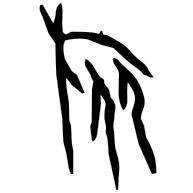 甲骨文 oracle bone · 商
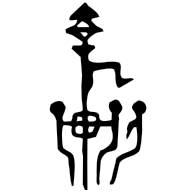 金文 bronze · 西周早期
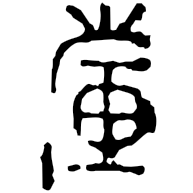 戰國文字 Warring States · 戰國.晉
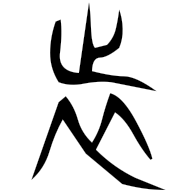 篆文 seal
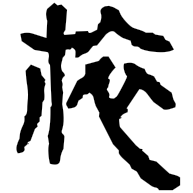 隸書 clerical · 秦
 楷書 regular
Legge's note (1882)
Legge's title for the hexagram: travellers, strangers.
LVI. The name Lü denotes people travelling abroad, and is often translated by ‘strangers.’ As early as the time of king Wăn, there was a class of men who went about from one state to another, pursuing their business as pedlars or travelling merchants; but in Mencius II, i, chap. 5. 3, it is used for travellers generally, whatever it was that took them out of their own states. Confucius himself is adduced as a travelling stranger; and in this hexagram king Wăn is supposed to have addressed himself to the class of such men, and told them how they ought to comport themselves. They ought to cultivate two qualities,—those of humility and integrity (firm correctness). By means of these they would escape harm, and would make some little attainment and progress. Their rank was too low to speak of great things in connexion with them. It is interesting to find travellers, strangers in a strange land, having thus a place in the Yî. For the manner in which the component trigrams are supposed to give the idea that is in Lü, see Appendix II. In Appendix I there is an endeavour to explain the Thwan by means of the lines and their relation to one another. Line 1 is weak, in an odd place, and at the very bottom or commencement of the hexagram. These conditions are supposed to account for the unfavourable symbolism and auspice. Line 2 is weak, but in its proper place. That place, moreover, is the central. Hence the traveller—and he might here very well be a travelling merchant—is represented in the symbolism as provided with everything he can require; and though the auspice is not mentioned, we must understand it as being good. Line 3 is strong, and in an even place. But it occupies the topmost place in the lower trigram; and its strength may be expected to appear as violence. So it does in the symbolism, and extraordinary violence as well. It seems unreasonable to suppose, as in the conclusion, that one so described could be in any way correct. The Khang-hsî editors remark that the subjects of 2 and 3 are represented as having ‘lodging-houses,’ and not any of those of the other lines, because these are the only two lines in the places proper to them! Line 4 is strong, but in an even place. Hence its subject has not ‘a lodging-house;’ but has found a situation where he has shelter, though he is exposed to perils. Hence he is represented as having an axe, which may be available for defence. Still he is not at peace in his mind. The Khang-hsî editors observe well that the mention of an axe makes us think of caution as a quality desirable in a traveller. Line 5, though weak, is in the centre of the upper trigram, which has the quality of brightness and elegance. It is held to be the lord of the trigram Lî; and lines 4 and 6 are on either side in loyal duty to defend and help. Then the shooting a pheasant is supposed to be suggested; an elegant bird,—by the trigram of elegance. When an officer was travelling abroad in ancient times, his gift of introduction at any feudal court was a pheasant. The traveller here emblemed is praised by his attached friends, and exalted to a place of dignity by the ruler to whom he is acceptable. It will be seen how the idea of the fifth line being the ruler’s seat is dropt here as being alien from the idea of the hexagram, so arbitrary is the interpretation of the symbolism. Line 6 is strong, in an even place, at the extremity of Lî and of the whole hexagram. Its subject will be arrogant and violent; the opposite of what a traveller should be; and the issue will be evil. The symbolism must be allowed to be extravagant. What bird ever burned its nest? And the character for ‘ox’ is strangely used for ‘ox-like docility.’
Sources
- Chinese text: 周易, 維基文庫, page (revision 10647234); the text is public domain, the site's edits CC BY-SA 4.0.
- English: James Legge, The Yî King, Sacred Books of the East vol. XVI, Oxford 1882 (public domain), where this hexagram is “Lü”.
- Glyph images: 小學堂 字形演變, Academia Sinica (CC0 1.0).
- Pinyin: Unihan (Unicode License v3) with this site's readings for the classical cases. English gloss, relations, the idiom glosses, the English of the chronicle passages and the plain reading: this site.