- The 64
- Hexagram 39
39 蹇 Hardship
艮 Mountain below, 坎 Water above
Water on top of a mountain, with no way down: hardship, lameness, the going blocked. The text says the south-west is advantageous and the north-east is not, that the great person should be seen, and that firmness is good.
Tap a line of the figure to see where it leads when it changes. Cast for a question of your own. New here? What the I Ching is, coming from tarot.
This site's reading
卦辭 利西南,不利東北;利見大人,貞吉: the south-west is advantageous (the easy, level direction), the north-east is not (the mountain); see the great person; firm, good. The counsel of hardship is direction, not effort.
彖 The commentary: 蹇 is difficulty, danger ahead; to see danger and be able to stop is wisdom. The south-west is going and gaining the centre; the north-east is a way exhausted. Seeing the great person is going and achieving; firmness in the proper place sets the state right. "Great is the use of hardship's time."
大象 Water on the mountain: the noble person turns back to himself and cultivates virtue (反身修德). When the road is blocked, the work is inward.
爻 The lines: going is hard, coming brings praise; the king's minister in hardship on hardship, and not for his own sake; going is hard, coming turns back; going is hard, coming joins; great hardship, friends come; and at the top going is hard, coming is great, good, see the great person. Five of the six lines say the same thing: do not go, come back, and the coming is rewarded.
If your question is about
- A relationship
- Going forward is hard in every line; coming back brings praise, friends, greatness. Turn to yourself (the Image) rather than at the other.
- Work
- Stop when you see the danger (the commentary calls that wisdom). Take the level route, see the great person, do not push the mountain.
- A decision
- Not forward. Come back (five lines say it) and do the inward work; the friends arrive in the fifth line.
- No line changing
- Hardship as a state: the water stays on the mountain. Turn back to yourself and cultivate; the reward is for returning, not pressing.
Written from the text above and checked against it by Lun (2026-10-24). It is a way of reading the hexagram, not a prediction.
The text, with Legge
Judgment 卦辭
蹇:利西南,不利東北;利見大人,貞吉。
In (the state indicated by) Kien advantage will be found in the south-west, and the contrary in the north-east. It will be advantageous (also) to meet with the great man. (In these circumstances), with firmness and correctness, there will be good fortune. (Legge, 1882)
Commentary on the Judgment 彖
蹇,難也,險在前也。見險而能止,知矣哉!蹇利西南,往得中也;不利東北,其道窮也。利見大人,往有功也。當位貞吉,以正邦也。蹇之時用大矣哉!
The Image 大象
山上有水,蹇;君子以反身修德。
The six lines
Line 1 初六
往蹇,來譽。
From the first line, divided, we learn that advance (on the part of its subject) will lead to (greater) difficulties, while remaining stationary will afford ground for praise. (Legge, 1882)
The Image 小象
往蹇來譽,宜待也。
Changing, this line leads to 63 既濟 Jì Jì.
Line 2 六二
王臣蹇蹇,匪躬之故。
The second line, divided, shows the minister of the king struggling with difficulty on difficulty, and not with a view to his own advantage. (Legge, 1882)
The Image 小象
王臣蹇蹇,終无尤也。
Changing, this line leads to 48 井 Jǐng.
Line 3 九三
往蹇來反。
The third line, undivided, shows its subject advancing, (but only) to (greater) difficulties. He remains stationary, and returns (to his former associates). (Legge, 1882)
The Image 小象
往蹇來反,內喜之也。
Changing, this line leads to 8 比 Bǐ.
Line 4 六四
往蹇來連。
The fourth line, divided, shows its subject advancing, (but only) to (greater) difficulties. He remains stationary, and unites (with the subject of the line above). (Legge, 1882)
The Image 小象
往蹇來連,當位實也。
Changing, this line leads to 31 咸 Xián.
Line 5 九五
大蹇朋來。
The fifth line, undivided, shows its subject struggling with the greatest difficulties, while friends are coming to help him. (Legge, 1882)
The Image 小象
大蹇朋來,以中節也。
Changing, this line leads to 15 謙 Qiān.
Line 6 上六
往蹇來碩,吉;利見大人。
The topmost line, divided, shows its subject going forward, (only to increase) the difficulties, while his remaining stationary will be (productive of) great (merit). There will be good fortune, and it will be advantageous to meet with the great man. (Legge, 1882)
The Image 小象
往蹇來碩,志在內也。利見大人,以從貴也。
Changing, this line leads to 53 漸 Jiàn.
Related hexagrams
Where the name comes from
蹇
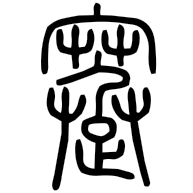 篆文 seal
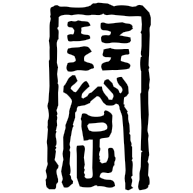 隸書 clerical
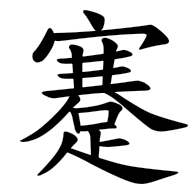 楷書 regular
Legge's note (1882)
Legge's title for the hexagram: difficulty (incompetency in the feet).
XXXIX. Kien is the symbol for incompetency in the feet and legs, involving difficulty in walking; hence it is used in this hexagram to indicate a state of the kingdom which makes the government of it an arduous task. How this task may be successfully performed, now by activity on the part of the ruler, and now by a discreet inactivity:—this is what the figure teaches, or at least gives hints about. For the development of the meaning of the symbolic character from the structure of the lineal figure, see Appendixes I and II. The Thwan seems to require three things—attention to place, the presence of the great man, and the firm observance of correctness—in order to cope successfully with the difficulties of the situation. The first thing is enigmatically expressed, and the language should be compared with what we find in the Thwan of hexagrams 2 and 40. Referring to Figure 2, in Plate III, we find that, according to Wăn’s arrangement of the trigrams, the south-west is occupied by Khwăn, and the north-east by Kăn. The former represents the champaign country; the latter, the mountainous region. The former is easily traversed and held; the latter, with difficulty. The attention to place thus becomes transformed into a calculation of circumstances; those that promise success in an enterprise, which should be taken advantage of, and those that threaten difficulty and failure, which should be shunned. This is the generally accepted view of this difficult passage. The Khang-hsî editors have a view of their own. I have been myself inclined to find less symbolism in it, and to take the south-west as the regions in the south and west of the kingdom, which we know from the Shih were more especially devoted to Wăn and his house, while the strength of the kings of Shang lay in the north and east. ‘The idea of “ the great man,” Mencius’s “ minister of Heaven,”’ is illustrated by the strong line in the fifth place, having for its correlate the weak line in 2. But favourableness of circumstances and place, and the presence of the great man do not dispense from the observance of firm correctness. Throughout these essays of the Yî this is always insisted on. Line 1 is weak, whereas it ought to be strong as being in an odd place. If its subject advance, he will not be able to cope with the difficulties of the situation, but be overwhelmed by them. Let him wait for a more favourable time. Line 2 is weak, but in its proper place. Its correlation with the strong 5, and consequent significance, are well set forth. Line 3 is strong, and in a place of strength; but its correlate in 6 is weak, so that the advance of its subject would be unsupported. He waits therefore for a better time, and cherishes the subjects of the two lines below, who naturally cling to him. Line 4 is weak, and, though in its proper place, its subject could do little of himself. He is immediately below the king or great man, however, and cultivates his loyal attachment to him, waiting for the time when he shall be required to act. Line 5 is the king, the man great and strong. He can cope with the difficulties, and the subjects of 2 and the other lines of the lower trigram give their help. The action of the hexagram is over; where can the weak 6 go forward to? Let him abide where he is, and serve the great man immediately below him. So shall he also be great;—in meritorious action at least.
Sources
- Chinese text: 周易, 維基文庫, page (revision 2405036); the text is public domain, the site's edits CC BY-SA 4.0.
- English: James Legge, The Yî King, Sacred Books of the East vol. XVI, Oxford 1882 (public domain), where this hexagram is “Kien”.
- Glyph images: 小學堂 字形演變, Academia Sinica (CC0 1.0).
- Pinyin: Unihan (Unicode License v3) with this site's readings for the classical cases. English gloss, relations, the idiom glosses, the English of the chronicle passages and the plain reading: this site.