- The 64
- Hexagram 54
54 歸妹 The Marrying Sister
兌 Lake below, 震 Thunder above
Thunder over the lake, the young woman following the older man: the marrying sister, the junior wife. The text is blunt: going brings evil, nothing is advantageous; the lines show what dignity is possible in a lesser place.
Tap a line of the figure to see where it leads when it changes. Cast for a question of your own. New here? What the I Ching is, coming from tarot.
This site's reading
卦辭 征凶,无攸利: going brings evil; nothing is advantageous. The hexagram is about the one who enters a situation as the second, not the first, and the text does not pretend otherwise.
彖 The commentary: the marrying sister is the great meaning of heaven and earth; if heaven and earth did not join, nothing would thrive, and marriage is humankind's end and beginning. Pleased and moving, that is marrying. Going brings evil because the positions are wrong; nothing advantageous because the yielding rides on the firm.
大象 Thunder over the lake: the noble person, by keeping the end in view, knows what will go wrong. The one counsel is foresight.
爻 The lines: the sister married as a secondary wife, the lame can still walk, going is good; one-eyed but able to see, firm like a recluse is advantageous; married off as a servant, returning as a secondary wife; the marriage delayed, a late marriage has its time; king Di Yi's sister married, her sleeves less fine than her junior's, the moon nearly full, good; and at the top the woman holds a basket with nothing in it and the man stabs the sheep without blood, nothing advantageous. The lame can walk, the one-eyed can see: dignity in a lesser place is the whole of it.
If your question is about
- A relationship
- Entering as the second, not the first; go no further, and keep what dignity the place allows (lines 1, 2). See the empty basket coming.
- Work
- A junior position with no leverage (the yielding rides the firm). Keep the end in view (the Image); the late marriage has its time.
- A decision
- No; going brings evil and nothing is advantageous. If you are already in it, lame but walking is the posture.
- No line changing
- The lesser place as a state. Foresee what will go wrong (the Image), keep your dignity, and do not expect the basket to fill.
Written from the text above and checked against it by Lun (2026-10-24). It is a way of reading the hexagram, not a prediction.
The text, with Legge
Judgment 卦辭
歸妹:征凶,无攸利。
Kwei Mei indicates that (under the conditions which it denotes) action will be evil, and in no wise advantageous. (Legge, 1882)
Commentary on the Judgment 彖
歸妹,天地之大義也。天地不交,而萬物不興,歸妹人之終始也。說以動,所歸妹也。征凶,位不當也。无攸利,柔乘剛也。
The Image 大象
澤上有雷,歸妹;君子以永終知敝。
The six lines
Line 1 初九
歸妹以娣,跛能履,征吉。
The first line, undivided, shows the younger sister married off in a position ancillary to the real wife. (It suggests the idea of) a person lame on one leg who yet manages to tramp along. Going forward will be fortunate. (Legge, 1882)
The Image 小象
歸妹以娣,以恆也。跛能履吉,相承也。
Changing, this line leads to 40 解 Xiè.
Line 2 九二
眇能視,利幽人之貞。
The second line, undivided, shows her blind of one eye, and yet able to see. There will be advantage in her maintaining the firm correctness of a solitary widow. (Legge, 1882)
The Image 小象
利幽人之貞,未變常也。
Changing, this line leads to 51 震 Zhèn.
Line 3 六三
歸妹以須,反歸以娣。
The third line, divided, shows the younger sister who was to be married off in a mean position. She returns and accepts an ancillary position. (Legge, 1882)
The Image 小象
歸妹以須,未當也。
Changing, this line leads to 34 大壯 Dà Zhuàng.
Line 4 九四
歸妹愆期,遲歸有時。
The fourth line, undivided, shows the younger sister who is to be married off protracting the time. She may be late in being married, but the time will come. (Legge, 1882)
The Image 小象
愆期之志,有待而行也。
Changing, this line leads to 19 臨 Lín.
Line 5 六五
帝乙歸妹,其君之袂,不如其娣之袂良,月幾望,吉。
The fifth line, divided, reminds us of the marrying of the younger sister of (king) Tî-yî, when the sleeves of her the princess were not equal to those of the (still) younger sister who accompanied her in an inferior capacity. (The case suggests the thought of) the moon almost full. There will be good fortune. (Legge, 1882)
The Image 小象
帝乙歸妹,不如其娣之袂良也。其位在中,以貴行也。
Changing, this line leads to 58 兌 Duì.
Line 6 上六
女承筐无實,士刲羊无血,无攸利。
The sixth line, divided, shows the young lady bearing the basket, but without anything in it, and the gentleman slaughtering the sheep, but without blood flowing from it. There will be no advantage in any way. (Legge, 1882)
The Image 小象
上六无實,承虛筐也。
Changing, this line leads to 38 睽 Kuí.
In history
The 左傳 and 國語, the chronicles of the sixth to fifth centuries BC, record real casts of the Changes and what came of them. One of them gave this hexagram.
656 BC: 晉獻公, about marrying his daughter 伯姬 to the lord of 秦
Asked: Should 伯姬 be married into 秦? The stalks gave 54 歸妹 with line 6 changing, to 38 睽.
不吉。其繇曰:『士刲羊,亦無衁也;女承筐,亦無貺也。西鄰責言,不可償也。歸妹之睽,猶無相也。』The scribe 史蘇 called it inauspicious. His oracle text: the man stabs the sheep and no blood comes; the woman lifts the basket and it is empty; the western neighbour will bring charges that cannot be paid. He added defeat for the 姬 by the 嬴 of 秦, a nephew following his aunt, and flight home after six years.
The marriage went ahead. In 645 BC 秦 captured 晉惠公, 伯姬's brother, at 韓原. Her nephew 子圉 fled from 秦 in 637 BC and was killed at 高梁 the next year.
左傳 僖公十五年, 維基文庫 (revision 10199429). The 左傳 recalls the cast under 僖公十五年 (645 BC) when the captured 惠公 regrets that his father ignored it; the year given is that of the marriage. The cited oracle is a variant of the received 歸妹 上六 (女承筐无實,士刲羊无血).
The chronicles' diviners read from oracle texts of their own time; where their words match our clause text the note says so, and where they do not, it says that. None of this is a claim that the text foretold the event.
Related hexagrams
Where the name comes from
歸
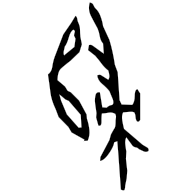 甲骨文 oracle bone · 商
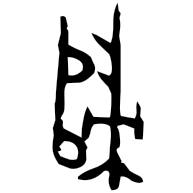 金文 bronze · 西周早期
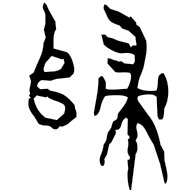 戰國文字 Warring States · 春秋晚期或戰國早期.晉
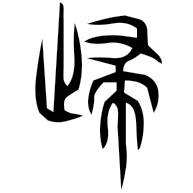 篆文 seal
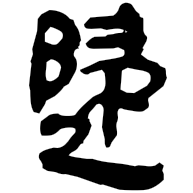 隸書 clerical · 秦
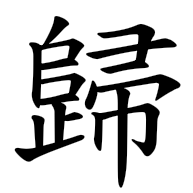 楷書 regular
妹
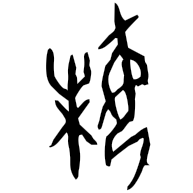 甲骨文 oracle bone · 商
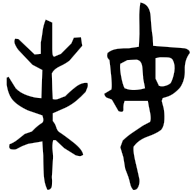 金文 bronze · 西周早期
 戰國文字 Warring States · 戰國.楚
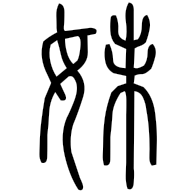 篆文 seal
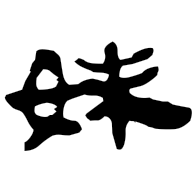 隸書 clerical · 西漢
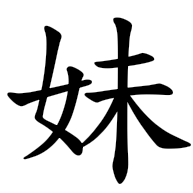 楷書 regular
Legge's note (1882)
Legge's title for the hexagram: giving in marriage.
LIV. Mei Kwei is a common way of saying that a young lady is married, or, literally, ‘is going home.’ If the order of the characters be reversed, the verb kwei will be transitive, and the phrase will signify ‘the marrying away of a daughter,’ or ‘the giving the young lady in marriage.’ In the name of this hexagram, Kwei is used with this transitive force. But Mei means ‘a younger sister,’ and not merely a young lady or a daughter. Kwei Mei might be equivalent to our ‘giving in marriage;’ but we shall find that the special term has a special appropriateness. The Thwan makes the hexagram give a bad auspice concerning its subject; and for this the following reasons are given:—According to Wăn’s symbolism of the trigrams, Tui, the lower trigram here, denotes the youngest daughter, and Kăn, the upper trigram, the oldest son. And as the action of the hexagram begins with that of the lower trigram, we have in the figure two violations of propriety. First, the marriage represented is initiated by the lady and her friends. She goes to her future home instead of the bridegroom coming to fetch her. Second, the parties are unequally matched. There ought not to be such disparity of age between them. Another reason assigned for the bad auspice is that lines 2, 3, 4, and 5 are all in places not suited to them, quite different from the corresponding lines in the preceding hexagram. Is then such a marriage as the above, or marriage in general, the theme of the hexagram? I think not. The marriage comes in, as in the preceding essay, by way of illustration. With all the abuses belonging to it as an institution of his country, as will immediately appear, the writer acknowledged it without saying a word in deprecation or correction of those abuses; but from the case he selected he wanted to set forth some principles which should obtain in the relation between a ruler and his ministers. This view is insisted on in Wan King’s ‘New Collection of Comments on the Yî (A.D. 1686).’ A feudal prince was said to marry nine ladies at once. The principal of them was the bride who was to be the proper wife, and she was attended by two others, virgins from her father’s harem; a cousin, and a half-sister, a daughter of her father by another mother of inferior rank. Under line 1 the younger sister of the hexagram appears in the inferior position of this half-sister. But the line is strong, indicative in a female of firm virtue. The mean condition and its duties are to be deplored, and give the auspice of lameness; but notwithstanding, the secondary wife will in a measure discharge her service. There will be good fortune. Notwithstanding apparent disadvantages, an able officer may do his ruler good service. Line 2 is strong, and in the centre. The proper correlate is 5, which, however, is weak, and in the place of a strong line. With such a correlate, the able lady in 2 cannot do much in the discharge of her proper work. But if she think only of her husband, like the widow who will die rather than marry again, such devotion will have its effect and its reward. Though blind of one eye, she yet manages to see. And so devoted loyalty in an officer will compensate for many disadvantages. Line 3 is weak, where it should be strong; and the attribute of pleased satisfaction belonging to Tui culminates in its subject. She turns out to be of so mean a character and such a slave of passion that no one will marry her. She returns and accepts the position of a concubine. Line 4 is strong, where it should be weak; but in the case of a female the indication is not bad. The subject of the line, however, is in no haste. She waits, and the good time will come. King Tî-yî has been already mentioned under the fifth line of hexagram 11, and in connexion with some regulation which he made about the marriage of daughters of the royal house. His sister here is honourably mentioned, so as to suggest that the adorning which she preferred was ‘the ornament of the hidden man of the heart.’ The comparison of her to ‘the moon almost full’ I am ready to hail as an instance where the duke of Kâu is for once poetical. Khăng-ȝze, however, did not see poetry, but a symbol in it. ‘The moon is not full,’ he says, ‘but only nearly full. A wife ought not to eclipse her husband!’ However, the sister of Tî-yî gets happily married, as she deserved to do, being represented by the line in the place of honour, having its proper correlate in 2. Line 6 is weak, at the top of the hexagram, and without a proper correlate. Hence its auspice is evil. The marriage-contract is broken, according to Kû Hsî, and does not take effect. The parties mentioned in the paragraph appear engaged in the temple, offering or sacrificing to the spirits of their ancestors. But the woman’s basket which should contain her offerings (The Shih, I, ii, ode 4) is empty, and the man attempts to perform his part in slaying the victim (The Shih, II, vi, ode 6. 5) without effect.
Sources
- Chinese text: 周易, 維基文庫, page (revision 10647182); the text is public domain, the site's edits CC BY-SA 4.0.
- English: James Legge, The Yî King, Sacred Books of the East vol. XVI, Oxford 1882 (public domain), where this hexagram is “Kwei Mei”.
- Glyph images: 小學堂 字形演變, Academia Sinica (CC0 1.0).
- Pinyin: Unihan (Unicode License v3) with this site's readings for the classical cases. English gloss, relations, the idiom glosses, the English of the chronicle passages and the plain reading: this site.