- The 64
- Hexagram 58
58 兌 Joy
兌 Lake below, 兌 Lake above
Two lakes joined, each feeding the other: joy, pleasure shared. The text says it gets through and that firmness is advantageous; the commentary says joy is what makes people forget their labour.
Tap a line of the figure to see where it leads when it changes. Cast for a question of your own. New here? What the I Ching is, coming from tarot.
This site's reading
卦辭 亨。利貞: it gets through; firmness advantageous. Joy with a firm centre is the condition; the lines sort the kinds of pleasure.
彖 The commentary: 兌 is joy; firm within and yielding without, joy with firmness is what accords with heaven and answers people. Lead the people with joy and they forget their toil; face danger with joy and they forget death. The greatness of joy is that the people are encouraged.
大象 Lakes joined: the noble person with friends discusses and practises. Joy here is conversation and study among friends.
爻 The lines: harmonious joy, good; sincere joy, good, regret gone; joy that is courted, evil; joy weighed and not yet at rest, a sickness kept off and there is gladness; trusting in what strips away, danger; and at the top joy that leads others on. Joy from within (lines 1 and 2) is good; joy fetched from outside (line 3) and joy that trusts the wrong thing (line 5) are the faults.
If your question is about
- A relationship
- Joy that comes from harmony and sincerity (lines 1 and 2), not fetched or flattered (line 3). Trusting what strips you (line 5) is danger.
- Work
- Lead with joy and people forget the toil (the commentary); discuss and practise with friends (the Image). Keep the centre firm.
- A decision
- Go, if the pleasure is sincere and the centre firm. Deliberated joy (line 4) is allowed to take its time.
- No line changing
- Joy as a state: two lakes feeding each other. Keep it inward and firm; the lake that only draws others on (line 6) runs dry.
Written from the text above and checked against it by Lun (2026-10-24). It is a way of reading the hexagram, not a prediction.
The text, with Legge
Judgment 卦辭
兌:亨。利貞。
Tui intimates that (under its conditions) there will be progress and attainment. (But) it will be advantageous to be firm and correct. (Legge, 1882)
Commentary on the Judgment 彖
兌,說也。剛中而柔外,說以利貞,是以順乎天,而應乎人。說以先民,民忘其勞;說以犯難,民忘其死;說之大,民勸矣哉!
The Image 大象
麗澤,兌;君子以朋友講習。
The six lines
Line 1 初九
和兌,吉。
The first line, undivided, shows the pleasure of (inward) harmony. There will be good fortune. (Legge, 1882)
The Image 小象
和兌之吉,行未疑也。
Changing, this line leads to 47 困 Kùn.
Line 2 九二
孚兌,吉,悔亡。
The second line, undivided, shows the pleasure arising from (inward) sincerity. There will be good fortune. Occasion for repentance will disappear. (Legge, 1882)
The Image 小象
孚兌之吉,信志也。
Changing, this line leads to 17 隨 Suí.
Line 3 六三
來兌,凶。
The third line, divided, shows its subject bringing round himself whatever can give pleasure. There will be evil. (Legge, 1882)
The Image 小象
來兌之凶,位不當也。
Changing, this line leads to 43 夬 Guài.
Line 4 九四
商兌,未寧,介疾有喜。
The fourth line, undivided, shows its subject deliberating about what to seek his pleasure in, and not at rest. He borders on what would be injurious, but there will be cause for joy. (Legge, 1882)
The Image 小象
九四之喜,有慶也。
Changing, this line leads to 60 節 Jié.
Line 5 九五
孚于剝,有厲。
The fifth line, undivided, shows its subject trusting in one who would injure him. The situation is perilous. (Legge, 1882)
The Image 小象
孚于剝,位正當也。
Changing, this line leads to 54 歸妹 Guī Mèi.
Line 6 上六
引兌。
The topmost line, divided, shows the pleasure of its subject in leading and attracting others. (Legge, 1882)
The Image 小象
上六引兌,未光也。
Changing, this line leads to 10 履 Lǚ.
Related hexagrams
Where the name comes from
兌
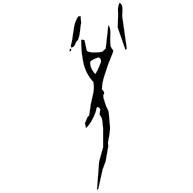 甲骨文 oracle bone · 商
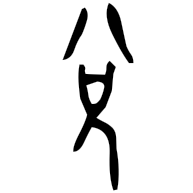 金文 bronze · 西周晚期
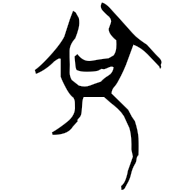 戰國文字 Warring States · 戰國.楚
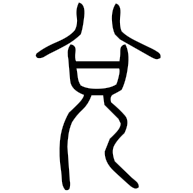 篆文 seal
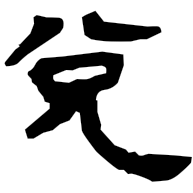 隸書 clerical · 西漢
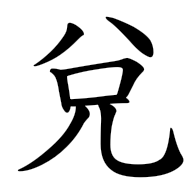 楷書 regular
Legge's note (1882)
Legge's title for the hexagram: pleasure, complacent satisfaction.
LVIII. The trigram Tui symbolises water as collected in a marsh or lake; and its attribute or virtus is pleasure or complacent satisfaction. It is a matter of some difficulty to determine in one’s mind how this attribute came to be connected with the trigram. The Khang-hsî editors say:—‘When the airs of spring begin to blow, from the collections of water on the earth the moistening vapours rise up (and descend again); so, when the breath of health is vigorous in a man’s person, the hue of it is displayed in his complexion. Akin to this is the significance of the hexagram Tui representing a marsh, as denoting pleasure. Although the yin lines give it its special character they owe their power and effect to the yang; so when the qualities of mildness and harmony prevail in a man, without true-heartedness and integrity to control and direct them, they will fail to be correct, and may degenerate into what is evil. Hence it is said that it will be advantageous to be firm and correct!’ The feeling then of pleasure is the subject of this hexagram. The above quotation sufficiently explains the concluding characters of the Thwan; but where is the intimation in Tui of progress and attainments? It is supposed to be in the one weak line surmounting each trigram and supported by the two strong lines. Fancy sees in that mildness and benignity energised by a double portion of strength. Line 1, strong in the place of strength, with no proper correlate above, is thus confined to itself. But its subject is sufficient for himself. There will be good fortune. Line 2, by the rule of place, should be weak, but it is strong. Without any proper correlate, and contiguous to the weak 3, the subject of it might be injuriously affected, and there would be cause for repentance. But the sincerity natural in his central position counteracts all this. The view of the third paragraph that appears in the translation is derived from the Khang-hsî editors. The evil threatened in it would be a consequence of the excessive devotion of its subject to pleasure. ‘The bordering on what is injurious’ in paragraph 4 has reference to the contiguity of line 4 to the weak 3. That might have an injurious effect; but the subject of 4 reflects and deliberates before he will yield to the seduction of pleasure, and there is cause for joy. The danger to the subject of line 5 is from the weak 6 above, in whom he is represented as ‘trusting.’ Possibly his own strength and sincerity of mind may be perverted into instruments of evil; but possibly, they may operate beneficially. The symbolism of paragraph 6 is akin to that of 3, though no positive auspice is expressed. The subject of line 3 attracts others round itself for the sake of pleasure; the subject of this leads them to follow himself in quest of it.
Sources
- Chinese text: 周易, 維基文庫, page (revision 2404993); the text is public domain, the site's edits CC BY-SA 4.0.
- English: James Legge, The Yî King, Sacred Books of the East vol. XVI, Oxford 1882 (public domain), where this hexagram is “Tui”.
- Glyph images: 小學堂 字形演變, Academia Sinica (CC0 1.0).
- Pinyin: Unihan (Unicode License v3) with this site's readings for the classical cases. English gloss, relations, the idiom glosses, the English of the chronicle passages and the plain reading: this site.