- The 64
- Hexagram 49
49 革 Reform
離 Fire below, 兌 Lake above
Fire in the lake, two things that cannot share a place: reform, the change of what must change. The text says it is believed only on the day it is done, that it gets through greatly with firmness, and that regret then vanishes.
Tap a line of the figure to see where it leads when it changes. Cast for a question of your own. New here? What the I Ching is, coming from tarot.
This site's reading
卦辭 已日乃孚,元亨。利貞。悔亡: on the day it is done, trusted; great, penetrating; firmness advantageous; regret vanishes. 革 is hide, skin stripped and worked; reform is believed after, not before.
彖 The commentary: water and fire extinguish each other, two women in one house whose wills do not meet: reform. Trusted on the day it is done because reform makes faith. Cultured and pleased, great success through correctness; reform that fits, and the regret is gone. Heaven and earth reform and the seasons are made; Tang and Wu changed the mandate, following heaven and answering the people.
大象 Fire in the lake: the noble person sets the calendar in order and makes the seasons clear. Reform is first of all a new reckoning of time.
爻 The lines: bound with yellow ox-hide; on the day it is done, reform, going is good, no blame; going is evil, firm and in peril, the word of reform three times agreed, then sincerity; regret gone, sincerity changes the mandate, good; the great person changes like a tiger, believed before any divination; and at the top the noble person changes like a leopard and the small man changes his face, going is evil, staying firm is good. Three agreements before the change (line 3), then the tiger.
If your question is about
- A relationship
- Change believed only once done; bind it first (line 1), agree it three times (line 3), then act. The small man only changes his face.
- Work
- Reset the calendar (the Image): the new reckoning before the new work. Go on the day it is done (line 2), not before.
- A decision
- Reform, with the three agreements behind you; then the tiger's change is trusted without a cast (line 5).
- No line changing
- Reform as a standing need: fire and water will not share the lake. Keep setting the seasons straight; the faith comes after the doing.
Written from the text above and checked against it by Lun (2026-10-24). It is a way of reading the hexagram, not a prediction.
The text, with Legge
Judgment 卦辭
革:已日乃孚,元亨。利貞。悔亡。
(What takes place as indicated by) Ko is believed in only after it has been accomplished. There will be great progress and success. Advantage will come from being firm and correct. (In that case) occasion for repentance will disappear. (Legge, 1882)
Commentary on the Judgment 彖
革,水火相息,二女同居,其志不相得,曰革。已日乃孚;革而信也。文明以說,大亨以正,革而當,其悔乃亡。天地革而四時成,湯武革命,順乎天而應乎人,革之時義大矣哉!
The Image 大象
澤中有火,革;君子以治歷明時。
The six lines
Line 1 初九
鞏用黃牛之革。
The first line, undivided, shows its subject (as if he were) bound with the skin of a yellow ox. (Legge, 1882)
The Image 小象
鞏用黃牛,不可以有為也。
Changing, this line leads to 31 咸 Xián.
Line 2 六二
已日乃革之,征吉,无咎。
The second line, divided, shows its subject making his changes after some time has passed. Action taken will be fortunate. There will be no error. (Legge, 1882)
The Image 小象
已日革之,行有嘉也。
Changing, this line leads to 43 夬 Guài.
Line 3 九三
征凶,貞厲,革言三就,有孚。
The third line, undivided, shows that action taken by its subject will be evil. Though he be firm and correct, his position is perilous. If the change (he contemplates) have been three times fully discussed, he will be believed in. (Legge, 1882)
The Image 小象
革言三就,又何之矣。
Changing, this line leads to 17 隨 Suí.
Line 4 九四
悔亡,有孚改命,吉。
The fourth line, undivided, shows occasion for repentance disappearing (from its subject). Let him be believed in; and though he change (existing) ordinances, there will be good fortune. (Legge, 1882)
The Image 小象
改命之吉,信志也。
Changing, this line leads to 63 既濟 Jì Jì.
Line 5 九五
大人虎變,未占有孚。
The fifth line, undivided, shows the great man (producing his changes) as the tiger (does when he) changes (his stripes). Before he divines (and proceeds to action), faith has been reposed in him. (Legge, 1882)
The Image 小象
大人虎變,其文炳也。
Changing, this line leads to 55 豐 Fēng.
Line 6 上六
君子豹變,小人革面,征凶,居貞吉。
The sixth line, divided, shows the superior man producing his changes as the leopard (does when he) changes (his spots), while small men change their faces (and show their obedience). To go forward (now) would lead to evil, but there will be good fortune in abiding firm and correct. (Legge, 1882)
The Image 小象
君子豹變,其文蔚也。小人革面,順以從君也。
Changing, this line leads to 13 同人 Tóng Rén.
Words that came from it
Phrases a billion people use today began as clauses of this hexagram.
- 革命
- to change the mandate. The word for revolution: 湯 and 武 'changed the mandate' of Heaven when they overthrew the Xia and the Shang. From the commentary on the Judgment 彖: 湯武革命.
Related hexagrams
Where the name comes from
革
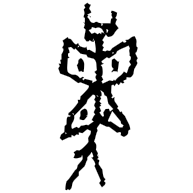 甲骨文 oracle bone · 商
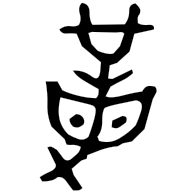 金文 bronze · 西周晚期
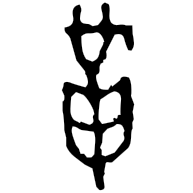 戰國文字 Warring States · 戰國.晉
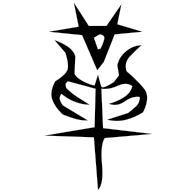 篆文 seal
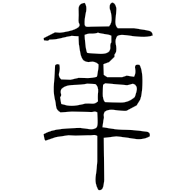 隸書 clerical · 秦
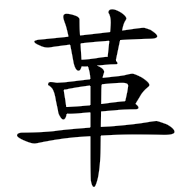 楷書 regular
Legge's note (1882)
Legge's title for the hexagram: changing.
XLIX. The character called Ko or Keh is used here in the sense of changing. Originally used for the skin of an animal or bird, alive or dead, it received the significance of changing at a very early time. Its earliest appearance, indeed, in the first Book of the Shû, is in that sense. How the transition was made from the idea of a skin or hide to that of change is a subject that need not be entered on here. The author has before him the subject of changes occurring—called for—in the state of the country; it may be on the greatest scale. The necessity of them is recognised, and hints are given as to the spirit and manner in which they should be brought about. For the way in which the notion of change is brought out of the trigrams of the figure, see Appendixes I and II. It is assumed in the Thwan that change is viewed by people generally with suspicion and dislike, and should not be made hastily. When made as a necessity, and its good effects appear, the issues will be great and good. A proved necessity for them beforehand; and a firm correctness in the conduct of them:—these are the conditions by which changes should be regulated. Line 1, at the bottom of the figure, may be taken as denoting change made at too early a period. It has no proper correlate or helper, moreover, above. Hence its subject is represented as tied up, unable to take any action. Line 2, though weak, is in its correct place. It is in the centre also of the trigram Lî, signifying brightness and intelligence, and has a proper correlate in the strong 5. Let its subject take action in the way of change. The symbolism of paragraph 3 is twofold. The line is strong, and in the correct position, but it has passed the centre of Sun and is on its outward verge. These conditions may dispose its subject to reckless and violent changing which would be bad. But if he act cautiously and with due deliberation, he may take action, and he will be believed in. Line 4 is strong, but in the place of a weak line. This might vitiate any action of its subject in the way of change, and give occasion for repentance. But other conditions are intimated that will have a contrary effect; and if he have further secured general confidence, he may proceed to the greatest changes, even to change the dynasty,—‘with good fortune.’ The conditions favourable to his action are said to be such as these:—The line has passed from the lower trigram into the upper; water and fire come in it into contact; the fourth place is that of the minister immediately below the ruler’s seat. All these considerations demand action from the subject of 4 in harmony with the idea of the hexagram. Line 5 has every quality proper to ‘the lord of the hexagram,’ and his action will be in every way beneficial. He is symbolled by the tiger; and the changes which he makes by the bright stripes of the tiger when he has changed his coat. Line 6 is weak, but its subject is penetrated with the spirit of the hexagram. If its subject be a superior man, only inferior to ‘the great man,’ immediately below, the changes he makes will be inferior only to his. If he be a small man, he will be compliant and submissive. The lesson for him, however, is to abide firm and correct without taking any action of his own.
Sources
- Chinese text: 周易, 維基文庫, page (revision 10643173); the text is public domain, the site's edits CC BY-SA 4.0.
- English: James Legge, The Yî King, Sacred Books of the East vol. XVI, Oxford 1882 (public domain), where this hexagram is “Ko”.
- Glyph images: 小學堂 字形演變, Academia Sinica (CC0 1.0).
- Pinyin: Unihan (Unicode License v3) with this site's readings for the classical cases. English gloss, relations, the idiom glosses, the English of the chronicle passages and the plain reading: this site.