- The 64
- Hexagram 7
7 師 The Army
坎 Water below, 坤 Earth above
Water under the earth: the army, the many held in order. The text says firmness and an elder's command bring good fortune without blame; everything else here depends on discipline.
Tap a line of the figure to see where it leads when it changes. Cast for a question of your own. New here? What the I Ching is, coming from tarot.
This site's reading
卦辭 Five characters: with firmness, an experienced man (丈人) is good, without blame. The army is the whole people when they move together; it goes well only under someone who has done it before and keeps to the rules.
彖 The commentary: 師 means the multitude; 貞 means correct; who can make the multitude correct can be king. Firm in the centre with response, moving through danger yet in accord; to poison the world with this (毒天下, the harsh word the text uses for war) and still have the people follow is good, and where is the blame?
大象 Water inside the earth: the noble person holds the people and gathers the multitude (容民畜衆). An army is a population first.
爻 The lines: the army sets out by the rules, and if not, evil; the leader in the midst of it, good, thrice honoured by the king; the army carting corpses, evil; the army withdrawing to camp, no blame; game in the field and the order to seize it, but a young son leading and corpses carted is evil; and at the top the great ruler giving out charges, states and houses, with small men not to be used. Rules, a seasoned leader, and who is rewarded afterwards: that is the whole story.
If your question is about
- A relationship
- Order and a steady elder hand; the text has no romance in it. The warning is line 3, many leaders and corpses.
- Work
- Discipline first (師出以律). Lead from the middle; retreat to camp is no blame; do not hand the command to the inexperienced.
- A decision
- Go only under rules and with someone who has done it before. Afterwards, do not reward small men (the top line).
- No line changing
- The many in formation, holding. Keep the rules and the elder's command; the state itself is the counsel.
Written from the text above and checked against it by Lun (2026-10-24). It is a way of reading the hexagram, not a prediction.
The text, with Legge
Judgment 卦辭
師:貞丈人吉,无咎。
Sze indicates how, in the case which it supposes, with firmness and correctness, and (a leader of) age and experience, there will be good fortune and no error. (Legge, 1882)
Commentary on the Judgment 彖
師,眾也。貞,正也。能以眾正,可以王矣。剛中而應,行險而順,以此毒天下,而民從之,吉又何咎矣。
The Image 大象
地中有水,師;君子以容民畜衆。
The six lines
Line 1 初六
師出以律,否臧,凶。
The first line, divided, shows the host going forth according to the rules (for such a movement). If these be not good, there will be evil. (Legge, 1882)
The Image 小象
師出以律;失律,凶也。
Changing, this line leads to 19 臨 Lín.
Line 2 九二
在師中吉,无咎;王三錫命。
The second line, undivided, shows (the leader) in the midst of the host. There will be good fortune and no error. The king has thrice conveyed to him the orders (of his favour). (Legge, 1882)
The Image 小象
在師中吉,承天寵也。王三錫命,懷萬邦也。
Changing, this line leads to 2 坤 Kūn.
Line 3 六三
師或輿尸,凶。
The third line, divided, shows how the host may, possibly, have many inefficient leaders. There will be evil. (Legge, 1882)
The Image 小象
師或輿尸,大无功也。
Changing, this line leads to 46 升 Shēng.
Line 4 六四
師左次,无咎。
The fourth line, divided, shows the host in retreat. There is no error. (Legge, 1882)
The Image 小象
左次无咎,未失常也。
Changing, this line leads to 40 解 Xiè.
Line 5 六五
田有禽,利執言,无咎。長子帥師,弟子輿尸,貞凶。
The fifth line, divided, shows birds in the fields, which it will be advantageous to seize (and destroy). In that case there will be no error. If the oldest son leads the host, and younger men (idly occupy offices assigned to them), however firm and correct he may be, there will be evil. (Legge, 1882)
The Image 小象
長子帥師,以中行也。弟子輿尸,使不當也。
Changing, this line leads to 29 坎 Kǎn.
Line 6 上六
大君有命,開國承家,小人勿用。
The topmost line, divided, shows the great ruler delivering his charges, (appointing some) to be rulers of states, and others to undertake the headship of clans; but small men should not be employed (in such positions). (Legge, 1882)
The Image 小象
大君有命,以正功也。小人勿用,必亂邦也。
Changing, this line leads to 4 蒙 Méng.
Related hexagrams
Where the name comes from
師
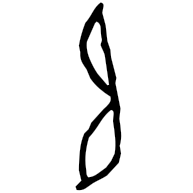 甲骨文 oracle bone · 商
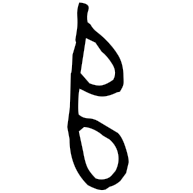 金文 bronze · 西周早期
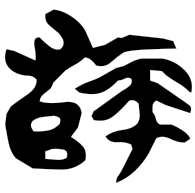 戰國文字 Warring States · 戰國.楚
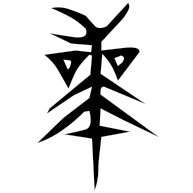 篆文 seal
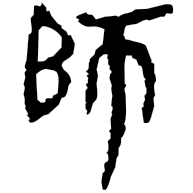 隸書 clerical · 秦
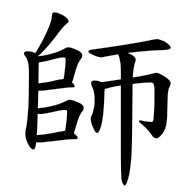 楷書 regular
Legge's note (1882)
Legge's title for the hexagram: .
VII. The conduct of military expeditions in a feudal kingdom, and we may say, generally, is denoted by the hexagram Sze. Referring to Appendixes I and II for an explanation of the way in which the combination of lines in it is made out to suggest the idea of an army, and that idea being assumed, it is easy to see how the undivided line in the second place should be interpreted of the general, who is responded to by the divided line in the fifth and royal place. Thus entire trust is reposed in him. He is strong and correct, and his enterprises will be successful. He is denominated Kang Zăn, ‘an old, experienced man.’ ‘The rules,’ it is said, ‘are twofold;—first, that the war be for a righteous end; and second, that the manner of conducting it, especially at the outset, be right.’ But how this and the warning in the conclusion should both follow from the divided line being in the first place, has not been sufficiently explained. How line 2 comes to be the symbol of the general in command of the army has been shown above on the Thwan. The orders of the king thrice conveyed to him are to be understood of his appointment to the command, and not of any rewards conferred on him as a tribute to his merit. Nor is stress to be laid on the ‘thrice.’ ‘It does not mean that the appointment came to him three times; but that it was to him exclusively, and with the entire confidence of the king.’ The symbolism of line 3 is very perplexing. P. Regis translates it:—‘Milites videntur deponere sarcinas in curribus. Male.’ Canon McClatchie has:—‘Third-six represents soldiers as it were lying dead in their baggage carts, and is unlucky.’ To the same effect was my own translation of the paragraph, nearly thirty years ago. But the third line, divided, cannot be forced to have such an indication. The meaning I have now given is more legitimate, taken character by character, and more in harmony with the scope of the hexagram. The subject of line 2 is the one proper leader of the host. But line 3 is divided and weak, and occupies the place of a strong line, as if its subject had perversely jumped over two, and perched himself above it to take the command. This interpretation also suits better in the 5th paragraph. Line 4 is weak and not central; and therefore ‘to retreat’ is natural for its subject. But its place is even, and proper for a divided line; and the retreat will be right in the circumstances. In line 5 we seem to have an intimation of the important truth that only defensive war, or war waged by the rightful authority to put down rebellion and lawlessness, is right. ‘The birds in the fields’ symbolise parties attacking for plunder. The fifth line symbolises the chief authority,—the king, who is weak, or humble, and in the centre, and cedes the use of all his power to the general symbolised by line 2. The subject of 2 is ‘the oldest son.’ Those of three and four are supposed to be ‘the younger brother and son,’ that is, the younger men, who would cause evil if admitted to share the command. The lesson on the topmost line is true and important, but the critics seem unable to deduce it from the nature of the line, as divided and in the sixth place.
Sources
- Chinese text: 周易, 維基文庫, page (revision 2405011); the text is public domain, the site's edits CC BY-SA 4.0.
- English: James Legge, The Yî King, Sacred Books of the East vol. XVI, Oxford 1882 (public domain), where this hexagram is “Sze”.
- Glyph images: 小學堂 字形演變, Academia Sinica (CC0 1.0).
- Pinyin: Unihan (Unicode License v3) with this site's readings for the classical cases. English gloss, relations, the idiom glosses, the English of the chronicle passages and the plain reading: this site.