- The 64
- Hexagram 9
9 小畜 Small Restraint
乾 Heaven below, 巽 Wind above
Wind over heaven: a small, yielding line holding five strong ones. The text says it gets through, and that the thick clouds in the west have not yet rained.
Tap a line of the figure to see where it leads when it changes. Cast for a question of your own. New here? What the I Ching is, coming from tarot.
This site's reading
卦辭 It gets through. 密雲不雨,自我西郊: dense clouds, no rain, from our western outskirts. The image is of something held just short of release: enough to see, not enough to fall.
彖 The commentary: the yielding line has its place and those above and below respond to it; strong and gentle, firm in the centre, its will goes forward, so it gets through. Clouds without rain means still going on (尚往); from the western outskirts means the giving has not yet happened (施未行).
大象 Wind moving above heaven: the noble person refines the outward virtues (懿文德), the cultivated and civil ones. When the great thing cannot be done, polish the small ones.
爻 The lines: returning to one's own road, what blame, good; drawn back together, good; a carriage losing its axle straps, husband and wife looking askance; sincerity, blood goes and fear departs, no blame; sincerity that binds others, rich with one's neighbours; and at the top the rain has fallen and all is settled, the woman's firmness perilous, the moon near full, and for the noble person to go on is evil. The restraint lifts at the top, and the top is where to stop.
If your question is about
- A relationship
- A small thing holding a large one: tension, the carriage losing its straps (line 3). Sincerity that binds (4 and 5) is the way through.
- Work
- Resources held just short of release. Polish the small, civil things; drawing others together with sincerity is this hexagram's strength.
- A decision
- Not the big move; the clouds have not rained. When they have (top line), stop, do not go on.
- No line changing
- Small restraint as a state: the clouds stay thick. Refine what is in reach and keep the neighbours close.
Written from the text above and checked against it by Lun (2026-10-24). It is a way of reading the hexagram, not a prediction.
The text, with Legge
Judgment 卦辭
小畜:亨。密雲不雨,自我西郊。
Hsiâo Khû indicates that (under its conditions) there will be progress and success. (We see) dense clouds, but no rain coming from our borders in the west. (Legge, 1882)
Commentary on the Judgment 彖
小畜,柔得位而上下應之,曰小畜。健而巽,剛中而志行,乃亨。密雲不雨,尚往也。自我西郊,施未行也。
The Image 大象
風行天上,小畜,君子以懿文德。
The six lines
Line 1 初九
復自道,何其咎,吉。
The first line, undivided, shows its subject returning and pursuing his own course. What mistake should he fall into? There will be good fortune. (Legge, 1882)
The Image 小象
復自道,其義吉也。
Changing, this line leads to 57 巽 Xùn.
Line 2 九二
牽復,吉。
The second line, undivided, shows its subject, by the attraction (of the former line), returning (to the proper course). There will be good fortune. (Legge, 1882)
The Image 小象
牽復在中,亦不自失也。
Changing, this line leads to 37 家人 Jiā Rén.
Line 3 九三
車說輹,夫妻反目。
The third line, undivided, suggests the idea of a carriage, the strap beneath which has been removed, or of a husband and wife looking on each other with averted eyes. (Legge, 1882)
The Image 小象
夫妻反目,不能正室也。
Changing, this line leads to 61 中孚 Zhōng Fú.
Line 4 六四
有孚,血去惕出,无咎。
The fourth line, divided, shows its subject possessed of sincerity. The danger of bloodshed is thereby averted, and his (ground for) apprehension dismissed. There will be no mistake. (Legge, 1882)
The Image 小象
有孚。惕出。上合志也。
Changing, this line leads to 1 乾 Qián.
Line 5 九五
有孚攣如,富以其鄰。
The fifth line, undivided, shows its subject possessed of sincerity, and drawing others to unite with him. Rich in resources, he employs his neighbours (in the same cause with himself). (Legge, 1882)
The Image 小象
有孚攣如,不獨富也。
Changing, this line leads to 26 大畜 Dà Chù.
Line 6 上九
既雨既處,尚得載,婦貞厲,月幾望,君子征凶。
The topmost line, undivided, shows how the rain has fallen, and the (onward progress) is stayed;—(so) must we value the full accumulation of the virtue (represented by the upper trigram). But a wife (exercising restraint), however firm and correct she may be, is in a position of peril, (and like) the moon approaching to the full. If the superior man prosecute his measures (in such circumstances), there will be evil. (Legge, 1882)
The Image 小象
既雨既處,德積載也。君子征凶,有所疑也。
Changing, this line leads to 5 需 Xū.
Words that came from it
Phrases a billion people use today began as clauses of this hexagram.
- 密雲不雨
- dense clouds that do not rain. Something that gathers and gathers and never comes; said of plans, moods and weather. From the Judgment: 密雲不雨.
- 夫妻反目
- husband and wife turn their eyes away from each other. 反目 is still the ordinary word for a falling-out between people who were close. From line 3: 夫妻反目.
Related hexagrams
Where the name comes from
小
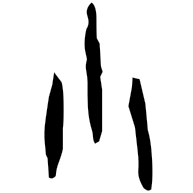 甲骨文 oracle bone · 商
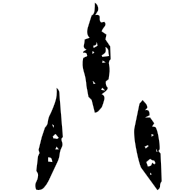 金文 bronze · 西周早期
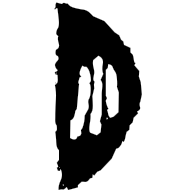 戰國文字 Warring States · 戰國.秦
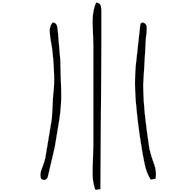 篆文 seal
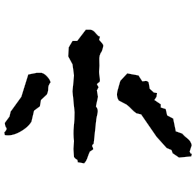 隸書 clerical · 秦
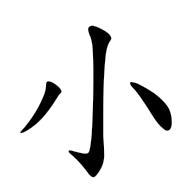 楷書 regular
畜
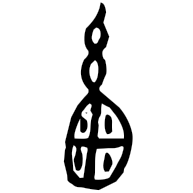 甲骨文 oracle bone · 商
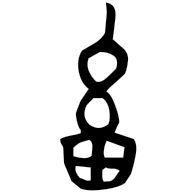 金文 bronze · 春秋中期
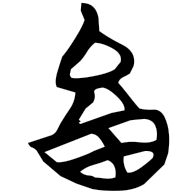 戰國文字 Warring States · 戰國.楚
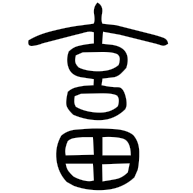 篆文 seal
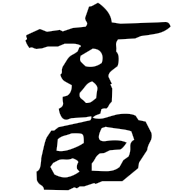 隸書 clerical · 秦
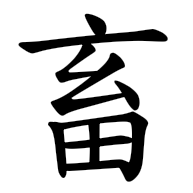 楷書 regular
Legge's note (1882)
Legge's title for the hexagram: small restraint.
IX. The name Hsiâo Khû is interpreted as meaning ‘small restraint.’ The idea of ‘restraint’ having once been determined on as that to be conveyed by the figure, it is easily made out that the restraint must be small, for its representative is the divided line in the fourth place; and the check given by that to all the undivided lines cannot be great. Even if we suppose, as many critics do, that all the virtue of that upper trigram Sun is concentrated in its first line, the attribute ascribed to Sun is that of docile flexibility, which cannot long be successful against the strength emblemed by the lower trigram Khien. The restraint therefore is small, and in the end there will be ‘progress and success.’ The second sentence of the Thwan contains indications of the place, time, and personality of the writer which it seems possible to ascertain. The fief of Kâu was the western portion of the kingdom of Yin or Shang, the China of the twelfth century B.C., the era of king Wăn. Rain coming and moistening the ground is the cause of the beauty and luxuriance of the vegetable world, and the emblem of the blessings flowing from good training and good government. Here therefore in the west, the hereditary territory of the house of Kâu, are blessings which might enrich the whole kingdom; but they are somehow restrained. The dense clouds do not empty their stores. P. Regis says:—‘To declare openly that no rain fell from the heavens long covered with dense clouds over the great tract of country, which stretched from the western border to the court and on to the eastern sea, was nothing else but leaving it to all thoughtful minds to draw the conclusion that the family of Wăn was as worthy of the supreme seat as that of Shâu, the tyrant, however ancient, was unworthy of it (vol. i, p. 356).’ The intimation is not put in the Text, however, so clearly as by P. Regis. Line 1 is undivided, the first line of Khien, occupying its proper place. Its subject, therefore, notwithstanding the check of line 4, resumes his movement, and will act according to his strong nature, and go forward. Line 2 is also strong, and though an even place is not appropriate to it, that place being central, its subject will make common cause with the subject of line 1; and there will be good fortune. Line 3, though strong, and in a proper place, yet not being in the centre, is supposed to be less able to resist the restraint of line 4; and hence it has the ill omens that are given. The subject of line 4, one weak line against all the strong lines of the hexagram, might well expect wounds, and feel apprehension in trying to restrain the others; but it is in its proper place; it is the first line also of Sun, whose attribute is docile flexibility. The strong lines are moved to sympathy and help, and ‘there is no mistake.’ Line 5 occupies the central place of Sun, and converts, by the sincerity of its subject, 4 and 6 into its neighbours, who suffer themselves to be used by it, and effect their common object. In line 6, the idea of the hexagram has run its course. The harmony of nature is restored. The rain falls, and the onward march of the strong lines should now stop. But weakness that has achieved such a result, if it plume itself on it, will be in a position of peril; and like the full moon, which must henceforth wane. Let the superior man, when he has attained his end, remain in quiet.
Sources
- Chinese text: 周易, 維基文庫, page (revision 10645530); the text is public domain, the site's edits CC BY-SA 4.0.
- English: James Legge, The Yî King, Sacred Books of the East vol. XVI, Oxford 1882 (public domain), where this hexagram is “Hsiâo Khû”.
- Glyph images: 小學堂 字形演變, Academia Sinica (CC0 1.0).
- Pinyin: Unihan (Unicode License v3) with this site's readings for the classical cases. English gloss, relations, the idiom glosses, the English of the chronicle passages and the plain reading: this site.